

TREASURES OF WAR
Superb and historically important RAF grouping, with both Bomber Command and Coastal Command interest, and one of only a handful of groups with a confirmed U-Boat “kill” credit.


flight lieutenant Eric Jones "titch"
The group comprises a wartime bomber and Coastal Command logbook, medals, photographs, and a remarkable photo album belonging to RAF Sergeant Eric Jones
Sergeant Jones was posted to RAF Bomber Command’s No. 58 Squadron at RAF Linton-on-Ouse in December 1941. Here, he flew aboard the cumbersome twin-engined Armstrong Whitworth Whitley bombers as a Wireless Operator/Air Gunner. His first operational sortie took place on 15 February 1942, when he flew to St Nazaire with Squadron Leader Harvey as his wireless operator. Further operations followed against targets in Norway and occupied France.
In April 1942, No. 58 Squadron transferred to Coastal Command. Now based at RAF St Eval in Cornwall, the squadron undertook anti-submarine patrols over the Western Approaches as part of No. 19 Group RAF. Sergeant Jones became a regular crew member with Flight Sergeant Stark’s crew, participating in numerous anti-submarine patrols and convoy escort operations. On 2 May 1942, they sighted and attacked a German U-Boat; the outcome of this engagement remains unclear and is still being researched. Jones’s logbook records many further patrols, some lasting in excess of nine hours, close to the operational endurance limits of the ageing Whitley bomber.

At the beginning of 1943, the squadron was re-equipped with the four-engined Handley Page Halifax. Following conversion training, the squadron resumed anti-submarine operations in March. On 11 May 1943, Pilot Officer Stark, with Sergeant Jones—nicknamed “Titch”—serving as Wireless Operator aboard Halifax HR742 (D), was tasked with escorting a naval convoy that included HMS Fleetwood and HMS Mignonette in the Bay of Biscay.
After rendezvousing with the convoy, the Halifax crew located two German submarines, one of which was U-528. HMS Fleetwood launched a series of depth-charge and gunfire attacks, forcing U-528 to the surface, where she came under sustained fire from both HMS Fleetwood and HMS Mignonette. Meanwhile, Stark and his crew attacked the second “shadowing” U-Boat with depth charges. Following the attack, observers reported the submarine’s stern lifting clear of the water before the vessel rolled and disappeared beneath the surface. A large piece of debris was thrown into the air by what appeared to be a secondary explosion, lifting the bow from the sea before it too disappeared. A substantial oil slick remained on the surface.
Pilot Officer Stark and his crew were subsequently officially credited with the destruction of a U-Boat, with HMS Fleetwood and Halifax HR742 jointly credited with the sinking of U-528. This represented one of only a small number of confirmed RAF U-Boat kills during the war. Accompanying this exceptional group is Jones’s superb wartime photograph album, which contains original photographs taken from the Halifax during the attack and sinking of U-528. These photographs are unique and unpublished.


Photos from the album of the sinking of U-Boat U528
In early August 1943, while undertaking another anti-submarine patrol, Jones’s crew sighted three enemy destroyers. As they closed in, still some three miles distant, the Halifax came under fire and was struck by an explosive shell, causing damage to the cockpit area and wounding the second pilot. Despite the damage, the aircraft returned safely to RAF St Eval.
On 12 October 1943, during another anti-submarine patrol, the crew sighted a surfaced U-Boat approximately two miles away. Attacking immediately from a height of just 100 feet, they released six 250lb Torpex depth charges. Black explosion plumes were observed on either side of the submarine, which submerged almost immediately. Although this attack was later assessed as only a possible kill, it demonstrated the continued aggressiveness and effectiveness of the crew. Shortly afterwards, Sergeant Jones completed his operational tour and was posted on leave.
Following leave, Jones joined a new crew under Flight Lieutenant Mallinson and embarked upon a second operational tour with No. 224 Squadron, this time flying Consolidated Liberators. He undertook many further anti-submarine patrols, during which he received a commission and rose to officer rank. Jones remained with No. 224 Squadron until his final operational flight on 28 January 1946, after which he was demobilised with the rank of Flight Lieutenant.
Eric Jones’s wartime RAF service encompassed two operational tours with both Bomber Command and Coastal Command. His service began in the obsolete Whitley bomber before progressing to the Halifax and finally the Liberator. During the war, he participated in at least 80 anti-submarine operations, in addition to 11 convoy escort and maritime sweep operations.
His logbook is extensively completed and exceptionally detailed. The group also includes his original boxed campaign medals: the 1939-45 Star, Air Crew Europe Star with Atlantic Clasp, Defence Medal, and War Medal, all complete with silk ribbons and original wax packets, and all preserved in very fine condition. Also included are his medal entitlement slips, identity discs (“dog tags”), service and release book, a portrait photograph showing his original tunic ribbon bar, and his outstanding wartime photograph album.
The accompanying ring binder contains copies of his operational records taken from the squadron Operational Record Books (ORBs), together with research relating to the sinking of U-528. The photograph album contains 22 original wartime photographs documenting his RAF service, including photographs of U-Boats under attack, the attack and sinking of U-528, crew photographs, aircraft photographs, signed photographs with crew inscriptions on the reverse, newspaper clippings, individual crew portraits, aircraft postcards, and other contemporary memorabilia.
An outstanding and historically significant RAF Coastal Command group, centred around one of the relatively few confirmed RAF U-Boat kills of the Second World War.


Above: U-boat Commander Georg von Rabenau, he survived and passed away in 1991 .
there were 45 survivors, Saidly 11 died.
Among the survivors was:
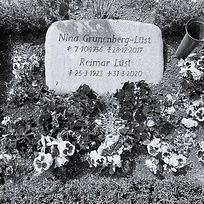
Reimar Lüst 25 March 1923 – 31 March 2020), After the war he was a German astrophysicist. He worked in European space science from its beginning, as the scientific director of the European Space Research Organisation (ESRO) from 1962 and as Director General of the European Space Agency (ESA) from 1984 until 1990.
Lüst taught internationally and influenced German politics as chairman of the Wissenschaftsrat from 1969 to 1972. He was the president of the German Max Planck Society from 1972 to 1984. As chairman of the board of Jacobs University Bremen, he shaped the international school towards excellence. His awards include Officer of the Légion d’Honneur and the Grand Cross of the Order of Merit of the Federal Republic of Germany.
Below: U-Boat U528, which took part in one wolfpack


The wolfpack was a convoy attack tactic employed in the Second World War. It was used principally by the U-boats of the Kriegsmarine during the Battle of the Atlantic, and by the submarines of the United States Navy in the Pacific War. The idea of a co-ordinated submarine attack on convoys had been proposed during the First World War but had had no success. In the Atlantic during the Second World War, the Germans had considerable successes with their wolfpack attacks but were ultimately defeated by the Allies. In the Pacific, the American submarine force was able to devastate Japan’s merchant marine, though this was not solely due to the wolfpack tactic. Wolfpacks fell out of use during the Cold War as the role of the submarine changed.
This well-documented historically significant RAF Bomber Command and Coastal Command grouping to Sergeant Eric Jones consists of:
1. Log Book, extensively completed, over half full.
2. Boxed medals 1939-45, Air Crew Europe stars with Atlantic bar, Defence & War medals all with silk ribbons, wax packets.
3. His medal slip.
4. Medal entitlement slip.
5. His dog tags.
6. Service & release book.
7. Portrait photo with Medal bar and rosette.
8. Superb wartime photograph album, contains 22 original wartime photographs documenting his RAF service, including photographs of U-Boats under attack, the attack and sinking of U-528, crew photographs, aircraft photographs, signed photographs with crew inscriptions on the reverse, newspaper clippings, individual crew portraits, aircraft postcards, etc.
9. Large ring binder full with copies of his operations taken from the squadron ORB, including various other information on the sinking of U-Boat U528.
10. War Dairy’s from the German U-Boot Museum in Altenbrucher Bahnhofstraße 57 Cuxhaven, Germany, 27 pages mostly in the German language.
11. U-528 - Interrogation Report.
WW2 Genuine Sleeve 1st and 6th Airborne Formation Patch


Genuine Sleeve Single 1st and 6th Airborne Formation Patch A very good uniform removed Single Pegasus Formation Patch for the 1st & 6th Airborne Divisions The badge shows the Greek mythological figure of Bellerophon upon the winged horse Pegasus. This the scarcer Patch for wear on the right sleeve, those for the left sleeve, for some strange reason, seeming to appear more often as singles. Very good condition with some adhesive marks from display
WW2 British original Tunic removed Parachute qualified jump Wing


A good original example of a British WW2 Airborne jump qualification wing. Embroidered to produce a high relief with stylised feathers with the parachute in lower relief . The slightly faded wings embroidered directly onto a khaki wool with cheesecloth type backing. Colouring remains with clear evidence of having been removed from a uniform.
1944 Broad Arrow Army WW2 Escape Axe Elwell 27N/1 RAF Aircraft


Superb Condition 1944 Broad Arrow Army WW2 Escape Axe, 27N/1 RAF Aircraft
The rubber handle is excellent no damage which is rare. Becoming hard to find in this condition
RAF sweetheart pin back brooch


RAF sweetheart pin back brooch, Made of white metal and enamel, the reverse has some markings by the original owner, not sure what it stands for. Size, 50mm span. In excellent condition.
Air Ministry I.C.A.N calibration navigational computer 1940/41


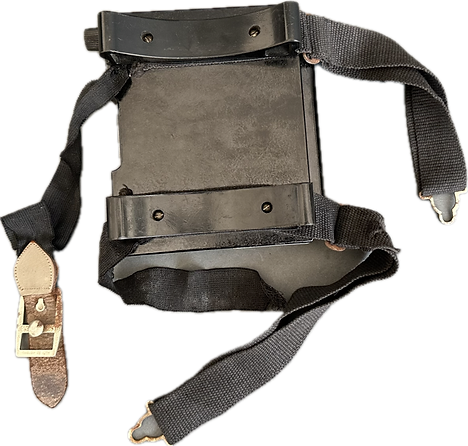

WW2 Era Air Ministry I.C.A.N Flight Dalton Computer, its full description it is an ‘Air Ministry I.C.A.N calibration navigational computer, model Ref no. 6b/180 Mk IIID* of 1940/41 commonly referred to as a ‘whiz wheel’ or Dalton computer, it is described as a manual, analog flight computer used to solve navigation problems such as true airspeed, ground speed, heading and height corrections, so considering all that technical information. It measures 6.25 long x 5.5 and still retains its fixing straps, some signs of surface pitting.
Veteran Bring-Back, Cardiff Royal Signals,
Selection of WW2 Money, Notes, Stamps and Coins etc.


Vet bring back As found amongst some items brought home by an ex member of the Royal Signals after WW2. Here we have a selection of various WW2 bank notes from around Europe and some coins, various. also included a period German officers visor with broken end loop the veteran also picked up. recently come to the market, dealer purchased direct off the granddaughter.
Marble Style Bust of Winston Churchill

This super bust of Winston Churchill is made from a reconstituted white marble, it has a very grainy feel and this style of material was very popular in the 1930’s through the 40’s which ties in I think with the age he is being portrayed, it stands 6.5 inches high and comes in very good condition.
Normandy Numbered Campaign Full Size Medal With Box
plus miniature and miniature Air Crew Europe medal

Commissioned by the Normandy Veterans Association the Normandy Campaign commemorative medal is a tribute to those who took part in the Normandy Campaign of World War II and is available exclusively to veterans of the Normandy Campaign, This is a Full Size issued Medal With Box, the Medal is numbered 10169 and complete with miniature, plus a miniature Air Crew Europe medal.
WW2 Parachute Regiment Cap Badge


WW2 Parachute Regiment Cap Badge Standard UK made white metal cap badge. Lugs to reverse.
Scarce Hitler hate club lapel / buttonhole badge


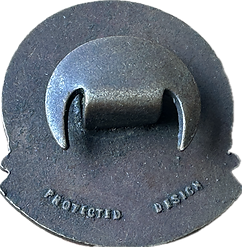
A good original Wartime period circular bronzed badge, portraying a "Lion Rampant" suppressing the dreaded serpent bearing the head of 'Adolph Hitler' with battleship in the background and title scroll "Hitler Hate Club" The reverse stamped in relief "protected design", Size 26mm x 30mm
A scarce home front Hitler Hate Club badge with great detail, this is the "male" type, the "female" one's having a pin fixing. In excellent uncleaned condition

WW2 gilt brass RAF Pathfinder’s eagle and five Pathfinder’s brass buttons.


WW2 era gilt brass RAF Pathfinder’s eagle together with five scarce Pathfinder’s brass buttons. The badge is in very good condition but missing its prongs from the back, all five buttons are in excellent condition and made by Pitt & Co London.
WWII No4 MKI* Aircraft Flare Pistol Dated 1944


WWII No4 MKI* Flare Pistol, This example is dated 1944, Primarily designed for use on RAF aircraft during WWII, 1 1/2 inch (37mm). It has distinctive locking lugs on the end of the barrel so it could be locked into a firing/locating bracket before being fired from the aircraft. During WWII the British devised a method of different coloured flares for different days of the week, so ground anti aircraft crews could distinguish them from enemy aircraft. Deactivated and in very good condition with moving parts but no main spring, one of the grips has the letter M stamped on it, the breech latch is stamped 44 and so is the top of the frame, also has Birmingham Proof House marks.


WW2 Humorous Death Card for Adolf Hitler


Issued during WW2 probably before Hitlers actual death a series of similar themed cards appeared, this one ironically titled ‘In Happy Memory’ follows with a short verse.
In Happy Memory
of
Adolf Hitler
who passed away through want
of breath and constant worry
May the Devil preserve him and let his
bones rot in everlasting torment.
It comes in good order for its age with some edge issues and measures 4.5 x 3.5
WW2 RAF Various Cloth Wing Insignia Badges


WWII British RAF Bomber (B) Wing Insignia - WWII British RAF Air Gunner (AG) Wing Insignia
WWII British RAF Engineer (E) Wing Insignia - WWII British RAF Navigators (N) Wing Insignia
WW2 Various RAF Officer's Mess room items
Various original RAF Mess room items.
Good quality Teaspoon,Sugar Tongs with RAF crest Kings Crown R.A.F crest to handles. 2 RAF Kings Crown small oval plates made by Mintons and a Large RAF Mug also with the Kings crown and makers mark on the bottom Newhall Hanley staffs pottery.
2 silver plated napkin rings issued by the Air Ministry, The rings are 46 mm diameter, depth 30 mm, each stamped with the King's crown and "AM"


Rare WW2 RAF Distress Flare Tin with Inert Cartridges 1944


RAF Tin for 3 Red Signal Flare Distress Cartridges.
Small red tin as issued with the multi-place dinghy in RAF bombers (Wellington, Lancaster, Stirling, Halifax etc.) still containing its original 3 red signal flare cartridges. While the tins occasionally turn up to find with orginal flares is very rare, complete with three original but inert Flare Cartridges filled with red plasticine to give the appearance of being live.
All cartridges are marked “Signal Red MK.X11T” in keeping with the tin and all are dated 4/44. All in excellent undamaged condition, very difficult to find.


Original Autograph H M Stephen Battle of Britain Pilot.
A framed and glazed autographed signature by Harbourne Mackay Stephen CBE, DSO, DFC & bar, AE.
H M Stephen was a British flying ace of the Royal Air Force Volunteer Reserve (RAFVR) during the Second World War. He was credited with the sole destruction of at least nine aircraft of the Axis powers.
Born in Elgin, Scotland, Stephen joined the RAFVR in 1937. Called up for service in the Royal Air Force (RAF) on the outbreak of the Second World War, he was posted first to No. 605 Squadron and then, following being commissioned a pilot officer, No. 74 Squadron. He flew extensively during the evacuation from Dunkirk and then the Battle of Britain, during which he destroyed at least four German aircraft. He was twice awarded the Distinguished Flying Cross during the Battle of Britain and at the end of 1940 was awarded the Distinguished Service Order.
From early- to mid-1941 he performed instructing duties and was then posted to No. 234 Squadron and participated in several offensive operations, attacking radar sites in France. He achieved his last aerial victory in October. Following the entry of the Empire of Japan into the war, he was sent to the Far East where he commanded No. 166 Wing and later served in a series of staff postings. After the war he chose to not pursue a career in the RAF and instead returned to his pre-war occupation as a newspaperman. Managing a number of newspaper titles for the next several years, he was made a Commander of the Order of the British Empire in 1985 for his services to the profession.
The original signature has been very nicely framed and comes with a copy photograph and RAF wings.


Original Signature – Douglas Webb RAF DFM Dam Buster
An original signature with a later photograph for Dam Buster RAF Douglas Webb DFM, below is a brief biography for his war service but far more is available online.
During World War II he served with the Royal Air Force as an air gunner with No. 49 Squadron and No. 617 Squadron. Douglas was front gunner with the crew of the Avro Lancaster AJ'O' for Orange, piloted by William Townsend, which took part in the Dam Busters Raid.
Webb was awarded the Distinguished Flying Medal for his part in the operation. Five of the crew were also given medals, making them the second most decorated Dams Raid crew after Guy Gibson's. Douglas also flew on 617 Squadron's last wartime operation, an attack on Hitler's mountain lair. He was one of only two men to fly on the squadron's first and last wartime operations.
The frame measures just over 7.5 inches square.